
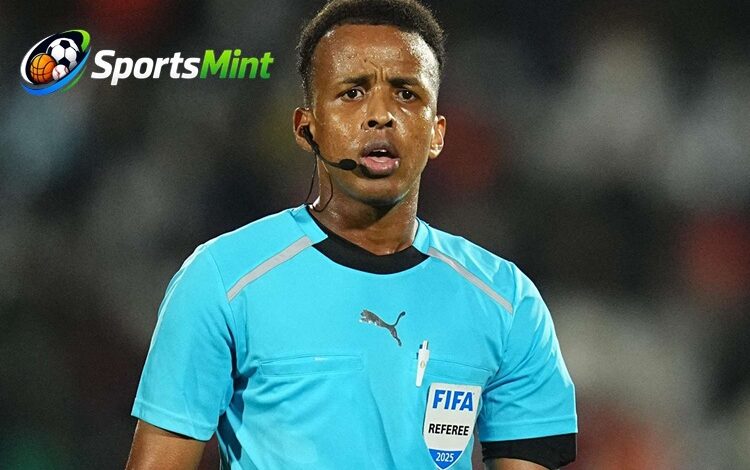
The 2026 FIFA World Cup has suffered an unexpected controversy even before the tournament gets fully underway. Somali referee Omar Abdulkadir Artan, one of Africa’s most respected match officials, has been ruled out of the competition after being denied entry into the United States despite reportedly holding a valid visa. The decision has sparked debate across the football world and raised fresh questions about immigration policies affecting major international sporting events.
Omar Artan’s Historic World Cup Dream Ends
For Omar Artan, the 2026 FIFA World Cup was supposed to be a landmark achievement. The award-winning Somali referee had been selected by FIFA to officiate at football’s biggest tournament, a milestone that would have made him the first Somali referee in World Cup history.
Instead, his World Cup journey came to an abrupt end after U.S. authorities denied him entry upon arrival at Miami International Airport. FIFA later confirmed that Artan would not be able to participate in training or officiate matches during the tournament.
The development has shocked many within the global football community, particularly because Artan had earned widespread recognition for his performances on the international stage.
Why Was Omar Artan Denied Entry?
According to U.S. Customs and Border Protection (CBP), the Somali official was found inadmissible following additional inspection procedures. Authorities cited “vetting concerns” but did not publicly provide further details about the specific reasons behind the decision.
Reports indicate that Artan possessed a valid visa before traveling to the United States. However, under U.S. immigration regulations, holding a visa does not automatically guarantee admission into the country, as final entry decisions are made at the port of arrival.
The incident comes amid ongoing discussions about U.S. travel restrictions and immigration screening procedures ahead of major international sporting events. Somalia is among the countries affected by broader travel-related measures implemented by the U.S. government.
FIFA’s Response To The Situation
FIFA moved quickly to clarify its position after the news emerged. The governing body stated that immigration and visa matters remain under the authority of the host nation and are outside FIFA’s control.
In its statement, FIFA confirmed that Artan would not be part of the World Cup officiating team because his immigration status would not change in time for the tournament.
The organization emphasized that host governments ultimately decide who can enter their territory, even for FIFA-sanctioned events.
One Of Africa’s Rising Refereeing Stars
Artan’s exclusion is particularly significant given his recent achievements. He was named the Confederation of African Football’s Best Male Referee for 2025 and had established himself as one of the continent’s most trusted officials.
His performances in major African competitions earned praise from players, coaches, and football administrators alike. Many observers viewed his World Cup appointment as recognition of years of dedication and excellence in officiating.
For Somalia, his selection carried even greater importance. Artan’s presence at the World Cup would have represented a historic moment for Somali football and served as inspiration for young referees across the country.
Impact On The 2026 FIFA World Cup
While FIFA has a deep pool of elite referees available for the tournament, Artan’s absence remains a symbolic loss.
The situation highlights the logistical and political challenges that can arise when global sporting events are hosted across multiple countries. The 2026 FIFA World Cup, jointly organized by the United States, Canada, and Mexico, is the largest edition in tournament history, featuring 48 national teams and hundreds of officials, staff members, and support personnel traveling internationally.
The case has also renewed discussions about how immigration policies can affect athletes, referees, and officials who are essential to the successful operation of major international competitions.
Reactions From The Football Community
The decision has generated strong reactions from football supporters and officials. Somali representatives and football stakeholders have expressed disappointment, arguing that Artan earned his World Cup opportunity through merit and years of outstanding service to the game.
Many observers believe the incident raises broader questions about inclusivity and equal access in international sports. Others note that governments retain the legal authority to determine admissibility regardless of sporting status.
As debate continues, Artan has received widespread support from colleagues and fans who recognize the significance of what would have been a groundbreaking achievement for Somali football.
Frequently Asked Questions
Who is Omar Abdulkadir Artan?
Omar Abdulkadir Artan is a Somali football referee and one of Africa’s leading match officials. He was selected to officiate at the 2026 FIFA World Cup and was named CAF Best Male Referee in 2025.
Why was Omar Artan denied entry into the United States?
U.S. authorities stated that he was deemed inadmissible due to unspecified vetting concerns following an inspection process. No detailed public explanation has been released.
Was Omar Artan selected for the 2026 FIFA World Cup?
Yes. FIFA selected Artan as part of its officiating team for the tournament before he was denied entry into the United States.
Will Omar Artan officiate at the 2026 FIFA World Cup?
No. FIFA has confirmed that he will not train or officiate during the tournament following the U.S. entry decision.
Conclusion
Omar Abdulkadir Artan’s removal from the 2026 FIFA World Cup is one of the tournament’s most surprising off-field stories. What should have been a historic moment for Somali football instead became a reminder of how immigration decisions can impact global sporting events. While FIFA prepares to move forward with the competition, many within the football community will continue to view Artan’s absence as a missed opportunity for both the referee and the sport itself.
His journey to the top of African refereeing remains a remarkable achievement, and despite this setback, his reputation as one of the continent’s finest officials remains firmly intact.